Cart
0
You may also like


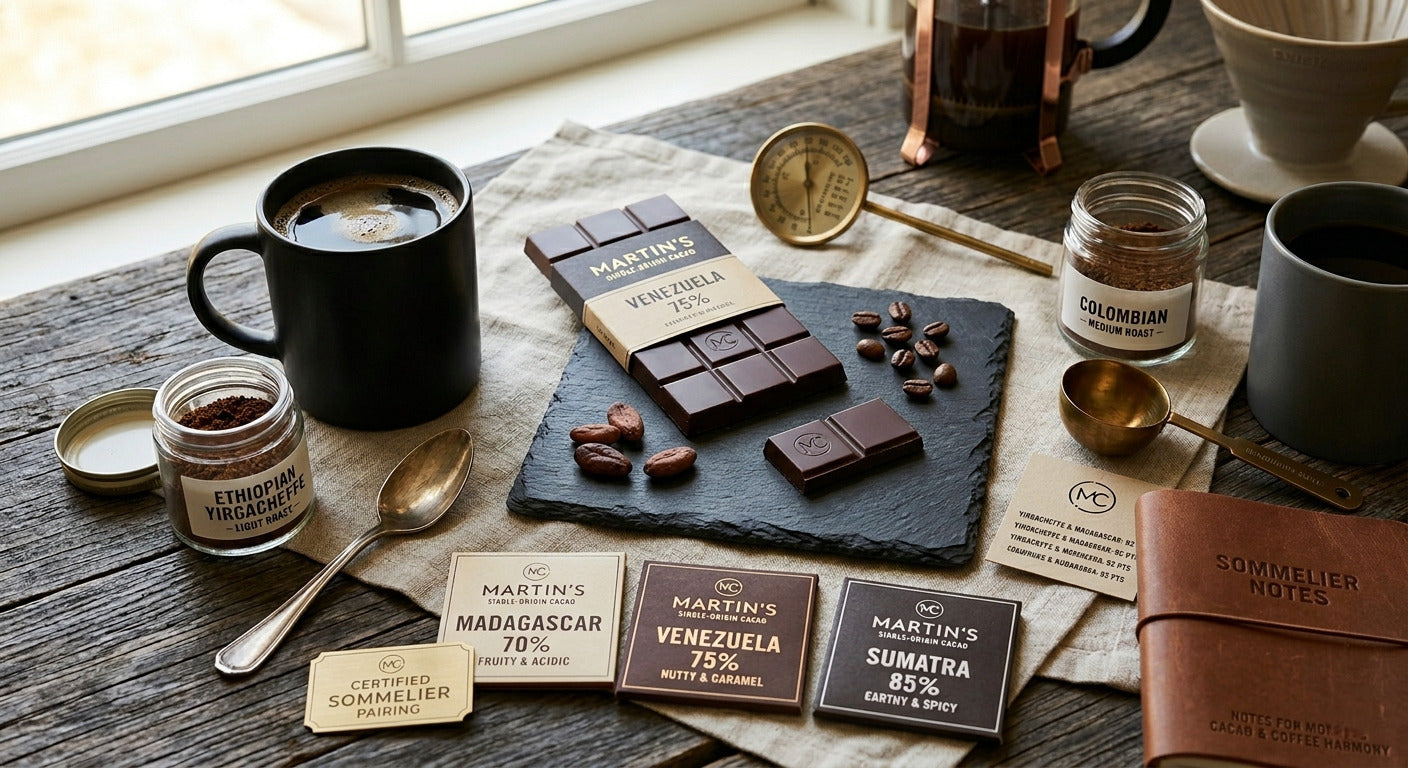
For many, the morning routine is a non-negotiable ritual. It’s the smell of freshly ground beans, the warmth of the mug, and that first, crucial sip of coffee. But what if you could elevate this experience from a routine to a daily indulgence? What if you could apply the principles of wine tasting—of a sommelier—to your breakfast table?
Welcome to the world of craft pairing. By matching the nuanced flavors of single-origin cacao with the specific profiles of your favorite coffee roasts, you unlock a sensory experience that is far greater than the sum of its parts. This isn't just about eating chocolate with coffee; it’s about understanding the shared terroir of these two ancient beans to create the perfect morning harmony.
To understand why cacao and coffee work together, we must first understand terroir. Both coffee and cacao are derived from the seeds of fruit trees (the Coffea and Theobroma cacao, respectively). These trees grow within the same equatorial band, often in overlapping regions.
Like wine grapes, the flavor profiles of both beans are dictated by the soil, altitude, temperature, and processing methods of their origin. A Peruvian cacao bean and a Kenyan coffee bean might both exhibit bright, fruity, citrus notes because their growing environments share similar characteristics.
Pairing isn’t arbitrary; it’s about biology. Chocolate and coffee share hundreds of flavor compounds. Crucially, they are both known for their bitterness and astringency (from tannins), balanced by inherent sweetness, fruit acidity, and fats.
When you take a bite of high-quality dark chocolate, the cocoa butter coats your palate. Following that with a sip of hot coffee melts the fat, releasing the volatile aroma compounds in both beans simultaneously. The heat maximizes bioavailability and amplifies subtle notes that would be lost if eaten separately. A well-executed pairing can suppress harsh bitterness while making fruit or nutty notes sing.
For those focusing on specific dietary preferences, our Vegan and Dairy-Free Options offer the same flavor purity, allowing for a clean, intense pairing experience without dairy interference.
Before we pair, we must know our ingredients. Single-origin chocolate (like single-origin coffee) is sourced from one specific region, country, or even a single farm. Unlike blended "supermarket" chocolate, these bars showcase unique, unadulterated flavors.
Here are the three primary profiles to look for:
The Fruity & Floral (Acidic): Often associated with beans from Madagascar or parts of Ecuador. These bars can be bright, featuring notes of red fruit (raspberry, citrus) or delicate flowers (jasmine).
The Earthy & Spicy (Savory): Typical of beans from Indonesia, Papua New Guinea, or parts of Brazil. These bars are robust, with deep tobacco, leather, black pepper, or even smoky notes.
The Nutty & Caramel (Balanced): common in beans from Ghana, Ivory Coast, or Venezuela. These represent the classic, comforting chocolate profile: roasted nuts, brown sugar, and cream.
Internal Link Idea: If you're starting your sommelier journey, explore our curated Luxury Chocolate Collections to identify these distinct profiles.
When building your pairing, apply these three concepts:
Match like-with-like. This enhances the shared characteristics. If you have a coffee with heavy nutty and caramel notes (like a classic Colombian), pair it with chocolate from Ghana or a premium Venezuelan bean that showcases the same nutty depth.
Pairing opposite flavors to create balance. This works exceptionally well for suppression. If you have a very bright, acidic, fruity coffee (like a light-roast Ethiopian Yirgacheffe), you can pair it with a very earthy, savory Indonesian cacao to ground the acidity and round out the experience.
Ensure the flavors don't fight. A heavy, dark, French-roasted coffee (high intensity) will completely overwhelm a delicate, complex, fruity, light-cacao bar. Match bold with bold, and subtle with subtle.
Internal Link Idea: For your bolder coffee roasts, browse our Dark Chocolate Selection for robust cacao percentages that won't get lost.
Let’s put the principles into practice with classic coffee profiles:
Example: Ethiopian Sidamo, Kenyan AA, Scandinavian Style Roasts.
The Profile: These coffees are complex, highlighting fruit acid, floral notes, and delicate sweetness. They have light bodies.
The Complement Pairing: A single-origin bar from Madagascar (70%+). This bar is famous for its natural red berry and citrus acidity. The shared fruitiness will intensify, creating a 'fruit-bomb' effect.
The Contrast Pairing: A high-percentage (80%+) chocolate from Papua New Guinea or Sumatra. These Earthy, smoky bars will ground the coffee's flighty acidity, revealing a surprising sweetness in both.
Example: Colombian Supremo, Costa Rican, 'Breakfast Blends.'
The Profile: The sweet spot. Acidity is balanced by the development of sugars. Nut, caramel, and chocolate notes are dominant. It is comforting and familiar.
The Complement Pairing: This is the ultimate comfort match. A single-origin bar from Venezuela (Chuao region) or a classic Ghana origin. Both are renowned for their profound chocolatey, nutty, and slightly cream notes. This pairing simply works, amplifying that 'classic morning ritual' feeling. For an elegant presentation, these pair beautifully with a variety of shapes found in our Chocolate Gift Boxes.
Example: French Roast, Italian Espresso, many Sumatra origins.
The Profile: Roasting flavors are dominant. Think toast, heavy caramel, black pepper, low acidity, and heavy body. Often features significant bitterness.
The Complement Pairing: A very dark, very robust bar (90%+) from Trinidad or Vietnam. These regions often produce beans that are inherently savory with hints of spice. The heavy body of the coffee matches the intensity, and the spice notes intertwine.
The Contrast Pairing: An 85%+ bar that features a naturally high fat content and no spice (like a pure Peruvian Criollo). The high fat content (cocoa butter) directly counters the heavy bitterness and astringency of the dark roast, creating a smooth, creamy finish.
This pairing practice is, at its heart, an exercise in mindfulness. By slowing down and analyzing the origin, acidity, and shared terroir of your morning beans, you turn a habit into a moment of focus. It is the perfect, sophisticated way to start your day, allowing you to become a true home sommelier.
Shop our latest craft single-origin arrivals here and elevate your next morning roast.